
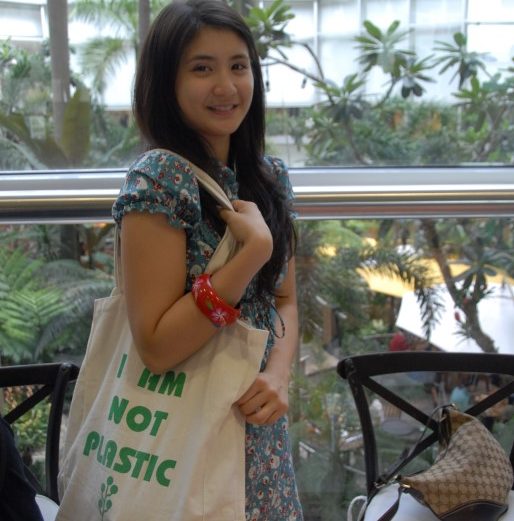
The tax on plastic bags is a prime example of a simple Government initiative that has had a major impact on usage and benefits to the environment.
Since a 5p charge on single use plastic bags was introduced in October 2015, the number handed out in the first six months of 2016 has dropped 85% from 7 billion to 500 million according to the Department for Environment, Food and Rural Affairs (Defra).
The charge has also raised £29m from retailers for good causes including charities and community groups, according to Defra. England was the last part of the UK to adopt the 5p levy, after successful schemes in Scotland, Wales and Northern Ireland.
The figures are very welcome and most reasonable people understand the need to cut the amount of plastic finding its way into oceans and buried in landfill.
To avoid the charge most of us are opting for a wide variety of bags for life, rucksacks and the ubiquitous bags from brands such as IKEA or Sports Direct. The choice of our shopping bag can have a major bearing on the overall environmental impact.
How many times should we reuse a cotton bag?
When we talk about environmental impact we don’t just mean the waste of throwing away reusable bags. There are wider issues such as energy used in production, chemicals used as well as the impacts of disposing a material that may or may not biodegrade within a reasonable time period.
In 2011, the UK’s Environment Agency, looked at seven different types of bags: paper, cotton, a biodegradable bag made from starch and polyester polymers, and four bags of varying polyethylene densities.
- Single use plastic bags are made from high-density polyethylene (HDPE)
- A plastic, so-called ‘bag for life’ is made from low-density polyethylene (LDPE)
- Cotton bags
- Paper bags
- Starch-polyester blend bags
- Heavy bags made from woven Polypropylene
- A lightweight HDPE with biodegradable additive

- Paper Bag – 3
- LDPE bag – 4
- Non-woven PP bag – 11
- Cotton bag – 131
The striking figure here is Cotton. Although a completely natural material, cotton takes a lot of energy, chemicals and resources to produce an item. Therefore you would need to reuse your cotton bag 131 times for it have a lesser impact than a single use plastic bag.
A cotton shopping bag still worth having as long as you bear in mind how often you need to reuse it for it to be in credit in the bank of environmental credit.
Further reading and references
Here’s how many times you have to reuse your tote bag for it to better than plastic
Life cycle assessment of supermarket carrier bags: a review of the bags available in 2006
Plastic bag use drops 85 per cent since 5p charge was introduced